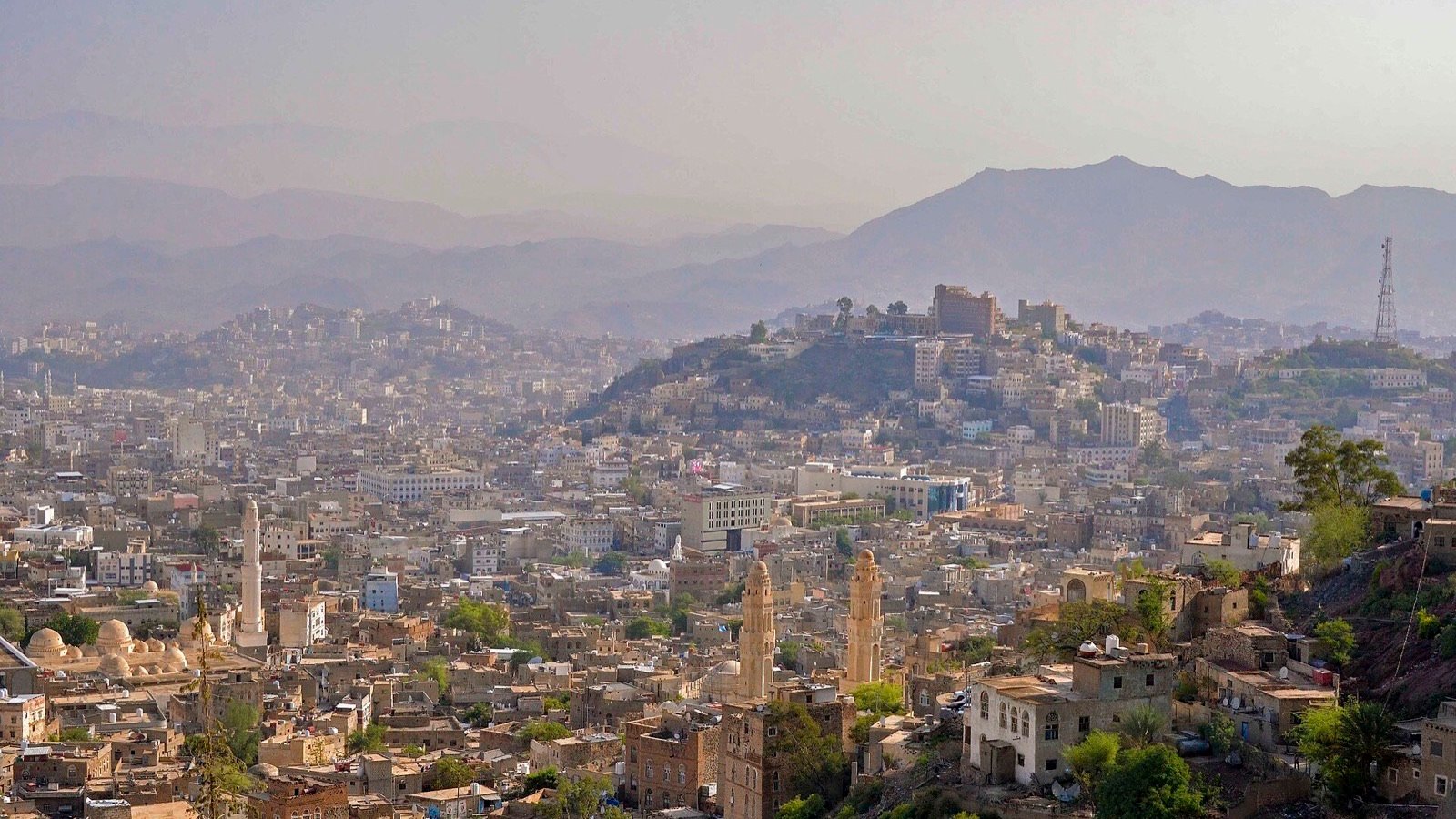
More than 800,000 people in the Yemeni city of Taiz have been cut off from humanitarian aid after nearly three weeks in which fighting has closed the roads into the city, United Nations agencies said on October 23, warning that water, food and fuel are running short.
“It’s 20 days and counting since Taiz has been cut off…we are seeing increasingly that the fighting makes it impossible for us to get in and impossible for people to get out,” Jens Laerke, spokesperson for the UN Office for the Coordination of Humanitarian Affairs (OCHA), told journalists in Geneva, according to UN News. He said very little fuel, food or other supplies had reached the city since access roads were cut. With diesel for water trucks scarce, water production in the city had fallen by about half and the cost of trucked water had roughly tripled, he said.
Houthi forces have encircled Taiz since early October, cutting off the road that links it to Aden, the interim capital of Yemen’s internationally recognized government, Al Jazeera reported. On October 20, UN human rights chief Volker Türk said: “The Houthis’ closure of the only supply route linking Taiz to Aden is placing civilians at grave risk, blocking humanitarian aid and cutting off essential supplies.” He said 32 civilians had been confirmed killed across Taiz governorate, including 14 children and nine women, UN News reported.
The World Food Programme (WFP) said the 800,000 people cut off in Taiz include 600,000 who depend on humanitarian assistance and 200,000 women and children. “We’re desperately trying to regain access to Taiz and we continue to support the broader operations across Yemen,” said Azfar Deen, a WFP regional communications officer.
Displacement is rising across the country. The International Organization for Migration (IOM) said on October 23 that more than 268,000 people had been displaced, almost all since the beginning of September, and that families were sheltering in 62 districts across 10 governorates. In Aden, the displaced population had more than doubled since October 7 to over 42,000, and Lahj was hosting around 67,000, the agency said. As of October 17, 3,836 Yemenis had arrived in Djibouti, half of them children. “Our teams are reaching people every day, but funding is falling far short,” said Abdusattor Esoev, IOM’s chief of mission in Yemen.
UN News, citing reports it did not identify, said on October 23 that at least 1,574 people had been killed and 6,939 injured in the conflict since August.
What the parties say
Colonel Majid al-Nuzaili, a spokesperson for government forces, said on October 23 that troops had conducted raids and counterattacks in Taiz over the previous 24 hours, “neutralising” 620 Houthi fighters and destroying 190 vehicles, Al Jazeera reported. On October 24, the government’s Ministry of Transport said the Houthis had targeted Aden’s international airport with two ballistic missiles, which it called the “fourth such attack this month,” according to Al Jazeera.
The Houthis claimed attacks on the al-Nasr camp and Aden’s naval military base. Houthi-run Al Masirah TV said on October 24 that air attacks by the Saudi-led coalition had killed several civilians in Sanaa and in the port city of Hodeidah; Al Jazeera said the claim could not be verified and that Saudi Arabia had not commented. None of the sources cited here included a Houthi statement on humanitarian access to Taiz.
Accounts differ on when the current phase began. Al Jazeera reported that a UN-brokered truce agreed in 2022 fell apart in July, when the Houthis announced a blockade on Saudi ports, while UN News dated the escalation between the Houthis and the Aden-based government to early September. The European Commission said on October 23 that it would release an additional 22.5 million euros ($25.2 million) in aid to Yemen, adding to 87.5 million euros allocated for 2026, Al Jazeera reported.
Why it matters
Aid workers say the window for preventing a deeper crisis is closing. Local humanitarian groups have distributed their remaining supplies to keep water pumps and hospitals running, Laerke said, adding: “It comes with a time code: The clock is running out.” The UN Children’s Fund (UNICEF) said it had pre-positioned nearly 8,000 cartons of ready-to-use therapeutic food across the governorate, enough for about three months, but spokesperson Ricardo Pires said access constraints and disrupted supply routes make it harder to move supplies and for families to reach treatment.
Türk warned of a significant rise in the risk of death and injury as fighting moves closer to densely populated parts of the city. The UN refugee agency (UNHCR) said some 65,000 refugees and asylum-seekers in Yemen, most from Somalia and Ethiopia, also urgently need support.
What to watch
UN agencies are seeking to restore access to the city, and Türk has appealed to Houthi forces to let aid in immediately. IOM said it faces a funding gap of $30 million over the next six months for its Yemen response, and Esoev said that without urgent support, “more families will go without assistance that could save their lives.”
The caveats
Battlefield claims by both government forces and the Houthis could not be independently verified. Displacement totals vary by date and method: UN News, also on October 23, cited an IOM count of approximately 258,679 people displaced between June 7 and October 19, below the agency’s later figure of more than 268,000.
Corrections and tips: email the editor using the address on the Contact page.